
Water Pumps

Greenhouse pumping systems for water supply, irrigation and dosing
Integrated Water Process supplies greenhouse pumping systems as part of coordinated water-process projects. We support controlled-environment agriculture (CEA), including commercial greenhouses and indoor cannabis cultivation, with pump selection, equipment supply, piping, controls coordination and installation support.
Our Total Water Management approach connects freshwater supply, irrigation, recirculation, recovery and chemical metering. Pump selection starts with what the water process needs to do: the liquid being moved, required flow and pressure, operating schedule and connections to the rest of the facility.
More than pump supply: a coordinated set of deliverables
A pump purchase is one part of the project. We connect equipment supply to the engineering, installation and verification work needed to put it into service. Depending on the agreed scope, the pumping-system package can include:
- Operating requirements and equipment selection: a documented flow and pressure basis, pump selection and the equipment information needed to review the proposed operating range.
- Pumps and associated components: supply of selected pumps and agreed valves, instruments and accessories, coordinated with the piping and control requirements.
- System drawings and installation details: equipment layouts, piping connections, instrumentation and control-interface requirements, with provision for isolation and maintenance access.
- Installation and integration: agreed mechanical installation and coordination with the responsible electrical and controls providers.
- Testing and handover: agreed flow, pressure and functional checks, recorded results, operating information and maintenance recommendations.
These deliverables draw on our planning, system design, installation, and testing and commissioning services. The proposal identifies the equipment, documents, field work and acceptance checks included. Detailed electrical design and controls programming have separately defined responsibilities.
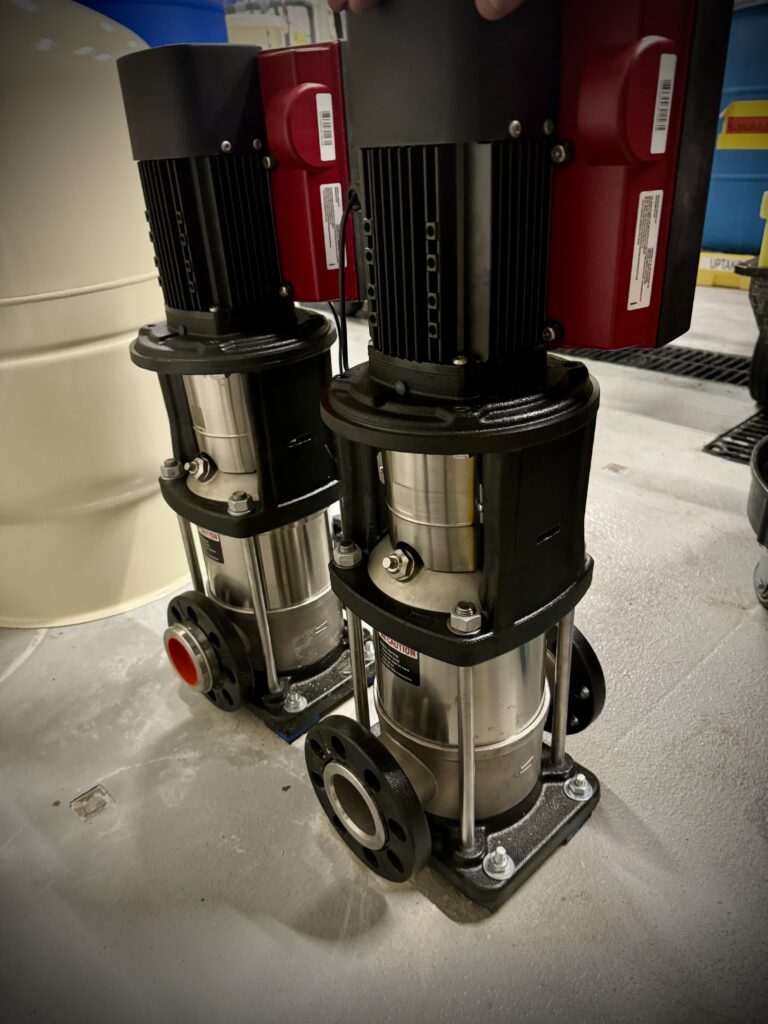
Five pumping applications within your water system
Freshwater supply (FWS) pumps
Freshwater supply pumping connects the available source or stored water to the facility’s treatment and distribution needs. We review source conditions, storage levels, demand and required pressure before selecting the pump arrangement.
Where continuity is important, we evaluate duty/standby or multiple-pump arrangements. Two pumps do not automatically provide full backup capacity: the design must establish what can operate with one pump unavailable, along with the required isolation, controls and power arrangements.
Irrigation water supply (IWS) pumps
Irrigation pumps are selected around the flow and pressure required by the active growing zones. The design coordinates irrigation schedules, distribution piping, valves, filtration and nutrient-delivery equipment so that pump operation matches the intended feeding strategy.
Pressure regulation, speed control and operating sequences are evaluated across the expected demand range. The goal is to meet defined water-delivery requirements, not simply install a larger pump. Explore our commercial irrigation systems.
Water recirculation pumps
Recirculation pumps move water through reservoirs, piping loops or treatment processes. We define the circulation duty, then select for the required flow, system resistance, liquid compatibility and operating hours. Continuous-duty capability is specified where continuous operation is required.
Circulation and water treatment serve different functions. The design coordinates both where water-quality management is part of the process; circulation alone is not a substitute for treatment.
Water recovery pumps
Recovery pumping transfers collected water to storage, treatment or another defined destination. Selection considers the recovered stream, expected inflow, collection levels, pumping distance and any solids or debris the equipment must handle.
Level-based operation, intermittent duty and variable-speed control are evaluated for the application rather than assumed to be necessary in every system. The arrangement should support the intended water reclamation process and its receiving capacity.

Chemical metering pumps
Metering pumps deliver measured quantities of fertilizer, additives or treatment chemicals into the water process. Selection considers the required dosing range, discharge pressure, accuracy, adjustability and compatibility of all components in contact with the liquid.
We coordinate manual or automatic operation with the intended control method, verification of delivered dose and relevant alarms or protective functions. The chemical, concentration and operating conditions must be checked against manufacturer requirements. Metering is part of the complete dosing process, not a set-and-forget substitute for operating checks.
Connect pumping to storage, treatment and irrigation
Pump requirements depend on the equipment and process on both sides of the pump. Our water storage, filtration, irrigation and recovery work addresses those connections together. Changes to tank levels, filters, piping or the zone schedule can change the operating conditions that need to be reviewed.
For an existing installation, available drawings, equipment information and operating records help establish the starting point. A replacement or expansion should be checked against the current water-system requirements rather than selected only by matching the old motor rating.
Frequently asked questions about greenhouse pumping systems
What size pump does my commercial hydroponic system need?
Start with the required flow and total head at the intended operating conditions. Also consider the liquid, suction conditions, operating hours and control method. Tank volume, plant count or motor horsepower alone cannot establish the selection. Manufacturer performance curves are reviewed against the system requirements and expected operating range.
How should a hydroponic water pump be maintained?
Use the manufacturer’s instructions, operating duty, liquid conditions and inspection history to define the maintenance plan. Changes in flow or pressure, leaks, unusual noise and repeated alarms should be recorded for review. Service work needs appropriate isolation and qualified personnel. Our water-system maintenance service can address the pump and its connected equipment within an agreed scope.
Does the pump have to be marketed specifically for hydroponics?
The application requirements matter more than the product label. A pump must be suitable for the actual liquid, flow, pressure, operating duty and installation conditions. Water, nutrient solutions, recovered water and concentrated additives can have different compatibility and handling requirements. Suitability is checked using manufacturer information, not assumed from a hydroponics label.
How do submersible and externally installed pumps differ?
Submersible pumps are designed for submerged operation. Externally installed pumps sit outside the reservoir and need suitable suction and discharge connections. Available space, water levels, access and manufacturer installation requirements guide the choice. Neither arrangement is automatically the better option for every greenhouse or indoor growing facility.
How are the required flow and pressure calculated?
Flow is based on the equipment and irrigation zones that operate together, including any separate transfer or recirculation duties. Total head accounts for the source-to-destination elevation and pressure differences, plus losses through piping, valves, filters and other components at that flow. It is not simply the vertical lift. The calculation is checked across the expected operating conditions before the pump is selected.
Discuss your pumping-system requirements
Tell us what needs to be pumped, where the project stands and how the system needs to operate. We will discuss the equipment supply, design, installation and testing support needed to connect pumping to your complete water process.
Email service@waterprocess.com with your location, project stage and any available pump information, flow or pressure requirements, facility drawings or water analyses.