
Hydroponic System Maintenance

Commercial hydroponic system maintenance based on operating conditions
Hydroponic system maintenance helps commercial growers understand equipment condition and plan the work needed to support water delivery. Integrated Water Process inspects and services pumps, filtration, treatment equipment, piping and monitoring instruments. We document findings, coordinate service around facility operations and identify repairs or further testing that need a defined scope.
Our Total Water Management approach considers how source water, treatment, storage, nutrient delivery and irrigation work together. We support commercial greenhouse and indoor growing facilities across the United States, with particular focus on the Midwest and Mid-Atlantic.
A useful maintenance plan builds on the equipment information and operating requirements established during system design and installation. Service history, operator observations and current measurements help identify what needs attention and how the work should be scheduled.
Identify equipment changes before the next service decision
The problem: operating conditions change between service visits
Filters can accumulate material, connections can develop leaks and instruments can produce inconsistent readings. Pump operating conditions may also change as demand, equipment or water conditions change. Without a record of checks and service, it can be difficult to distinguish a new issue from a recurring one.
The impact: operators have less information for troubleshooting
Changing flow, pressure or instrument readings can complicate irrigation and treatment decisions. Repeated alarms or overlooked service needs may lead to interruptions and reactive repairs. Missing records also make it harder to prioritize parts, schedule work or confirm whether an adjustment resolved the observed issue.
The maintenance response: inspect, service and document
We review the equipment and available operating information, agree on the service tasks and record the findings. Maintenance intervals are selected around manufacturer guidance, equipment duty, water conditions and inspection results. Follow-up recommendations distinguish routine service from repairs, testing or system changes requiring additional work.
What hydroponic water-system maintenance can cover
- Review operating conditions: consider service history, equipment information, alarms and operator observations before defining the visit.
- Inspect and service filtration: review filter condition, loading and relevant pressure information, and complete agreed cleaning or replacement tasks.
- Check treatment equipment: assess the equipment and available operating measures against its intended function and service requirements.
- Inspect pumps and valves: review operation, visible condition, connections and reported faults, with repairs or replacements agreed as needed.
- Review piping and storage connections: inspect accessible fittings, flanges, tank connections and isolation arrangements for service needs.
- Check and calibrate instruments: review relevant sensors, readings and calibration requirements using the applicable equipment procedures.
- Troubleshoot defined water-system issues: connect reported symptoms to observed equipment conditions and identify further investigation or corrective work.
- Document service and plan next actions: record tasks completed, findings, open items and recommendations for the next maintenance or repair scope.
Maintenance records that support operating decisions
The service scope identifies the equipment, tasks and records included. Depending on the visit, outputs can include:
- An equipment and task list identifying what was inspected, serviced or left for a later visit.
- Recorded observations and measurements such as relevant pressure, flow, equipment indications and instrument checks, with the operating conditions noted.
- A record of work completed covering agreed cleaning, adjustments, calibration, repairs or component replacements.
- Findings and open items distinguishing observed issues, unresolved questions and work requiring further authorization or investigation.
- Service recommendations and parts needs based on the equipment condition, manufacturer information and available operating history.
- An updated maintenance plan identifying agreed tasks, intervals, shutdown needs and responsibilities for operator checks and specialist service.
Replacement parts, major repairs, laboratory analysis and controls modifications are identified separately unless included in the agreed service scope. Water testing and analysis can investigate water-quality questions, while testing and commissioning can define a broader performance-verification scope.
From maintenance review to a documented service handover
1. Review equipment, symptoms and service history
Review the facility’s water process, available drawings and equipment information. Discuss reported faults, operating changes and previous work so the proposed visit addresses the actual service need.
2. Agree on tasks, access and operating interruptions
Define the work, available parts and records required. Coordinate access, equipment isolation and any shutdown window with the owner and responsible personnel before the visit.
3. Inspect and complete the agreed service
Carry out the defined equipment checks, cleaning, adjustments, calibration or corrective work using the relevant equipment requirements. Record findings and clarify additional work when the observed condition falls outside the agreed scope.
4. Check the serviced functions and record remaining issues
Complete the checks appropriate to the work and agreed operating conditions. Record the results, unresolved findings and any further information needed before the equipment is returned to its agreed operating status.
5. Review findings and plan the next service actions
Discuss the completed tasks, remaining items and relevant observations with the facility team. Agree on follow-up work, parts requirements and any changes to the maintenance plan supported by the visit.
Match maintenance to the equipment and water process
Filtration and treatment
Service requirements depend on the source water, filter or treatment type, operating duty and intended water quality. Observed loading, pressure changes and equipment records help determine the appropriate inspection and service tasks. Cleaning, replacement and treatment-equipment checks follow the relevant manufacturer and facility requirements.
Pumps, piping and storage
Reported changes in flow, pressure, pump behavior or leakage guide the equipment review. Accessible connections, isolation points and service clearances are considered alongside the component condition. An apparent equipment fault may also require review of the surrounding process rather than replacement of a single component.
Monitoring and precision operation
Precision means defining operating targets and acceptable deviations for flow, pressure, tank levels and relevant water-quality measures. The facility’s agreed targets guide instrument checks, including electrical conductivity (EC), pH and other installed measurements. Grower-defined nutrient and crop requirements remain part of the operating basis; equipment maintenance checks how the water system supports that basis.
Service intervals and responsibilities
There is no single service interval for every component or facility. Manufacturer guidance, operating hours, water conditions, equipment duty and findings from previous checks inform the plan. Operator observations, specialist maintenance and formal performance testing can have different schedules and responsibilities. Proposed equipment upgrades are reviewed as defined improvement work.
Explore the related water filtration, irrigation pump, water storage and hydroponic irrigation system solutions. The water-engineering glossary explains commonly used terms.
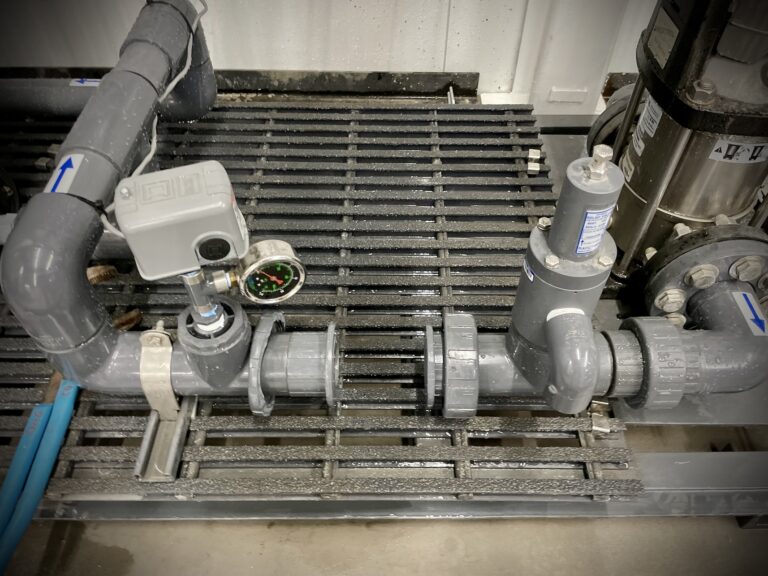
Equipment example: service access at a packaged pumping system
The photograph below shows a check valve, piping connections and instrumentation at a packaged pumping system. It illustrates how component condition, operating information and service access are considered together during maintenance. A reported fault may call for inspection of the valve, nearby connections and relevant pressure or flow information before corrective work is defined. The service record then identifies what was checked, any work completed and the findings that remain open. The findings help the facility decide which work to complete next and what to monitor between service visits.
Frequently asked questions about hydroponic system maintenance
What equipment can the maintenance service cover?
The agreed scope can cover pumps, filters, treatment equipment, valves, piping connections, storage connections and monitoring instruments. We review the equipment and service need before confirming which checks, tasks, parts and records are included.
How often should a commercial hydroponic water system be serviced?
Service intervals depend on manufacturer guidance, operating hours, water conditions, equipment duty and inspection findings. Operator checks and specialist service can follow different schedules. A maintenance plan identifies the relevant tasks and intervals rather than applying a single calendar interval to the entire system.
Will maintenance require a shutdown?
Some tasks require equipment isolation or a planned interruption to water delivery. The work scope, isolation arrangements, available redundancy and production requirements determine the expected interruption. Timing and any temporary arrangements are agreed with the facility before the work begins.
Can you review a system installed by another company?
We can review the system’s equipment, available documentation, condition and service access to establish a suitable maintenance scope. Parts availability, supplier requirements and unresolved design or installation questions are considered before corrective work is confirmed.
What signs should prompt a maintenance review?
Changing flow or pressure, leaks, repeated equipment alarms, unusual pump noise, filter loading and inconsistent instrument readings can warrant a review. Report the symptoms, affected equipment and operating conditions, and follow the facility’s established equipment and fault-response procedures while the work is assessed.
What documentation follows a maintenance visit?
The agreed service record can identify equipment checked, observations and measurements, tasks completed, open findings and recommended next actions. Where calibration, repairs or parts replacement are included, the relevant results and work are recorded. Follow-up recommendations distinguish further investigation from agreed corrective work.
Discuss your hydroponic water-system maintenance
Tell us about your equipment, operating conditions and service needs. We can review the information available and define the maintenance, troubleshooting or follow-up work that fits your facility.
Email service@waterprocess.com with your location, equipment information, service history and any reported faults or planned shutdown windows.