
Hydroponics Water Testing

Hydroponic water testing to guide source and treatment decisions
Hydroponic water testing helps commercial growers answer specific questions about source water, treatment and the water delivered through their systems. Integrated Water Process helps define the sampling plan, coordinate suitable laboratory analyses and interpret results. The work connects water-quality information to equipment requirements, operating decisions and any further investigation needed.
Our Total Water Management approach considers the water process from source through treatment, storage, nutrient delivery and any proposed recovery. We support commercial greenhouse and indoor growing facilities across the United States, with particular focus on the Midwest and Mid-Atlantic.
Testing can inform system planning, treatment-system design and equipment maintenance. The question being investigated determines which water locations, measurements and laboratory tests belong in the scope.
Turn water-quality questions into a defined testing plan
The problem: a few readings leave important questions unanswered
A source-water description or a routine instrument reading provides only part of the information needed to evaluate a water process. Different sources and treatment stages can have different characteristics. An unsuitable analytical panel or unclear sample location can leave the original operating question unresolved.
The impact: equipment decisions rely on incomplete information
Without relevant results, it can be difficult to compare sources, define treatment requirements or investigate a change in system operation. Reports from different locations or collection conditions may also be difficult to compare. Assumptions about untested substances can lead to decisions that the available data do not support.
The testing response: define the question, sample and interpretation
We identify the decision to be supported and coordinate a sampling and analytical scope suited to that question. Sample identification, laboratory requirements and operating conditions are considered before collection. Results are reviewed against the water process and agreed requirements, with follow-up testing or investigation identified where needed.
What a hydroponic water-testing scope can include
- Review source and process information: consider available municipal data, previous reports, treatment equipment and relevant operating history.
- Define the testing question: identify whether the work supports source selection, treatment evaluation, nutrient-solution investigation or recovered-water assessment.
- Select sampling locations: distinguish source, treated, stored, distribution and recovered water so the results can be interpreted in context.
- Coordinate sample collection: confirm responsibilities, identifiers, collection records and the receiving laboratory’s handling requirements.
- Arrange suitable laboratory analyses: identify local or specialty laboratory options and confirm the requested parameters, methods and sample type.
- Review field measurements: consider relevant pH, electrical conductivity (EC) and other operating readings alongside laboratory information.
- Interpret results for the water system: relate the findings to source conditions, treatment requirements and the facility’s operating basis.
- Identify next actions: recommend further sampling, treatment review, equipment checks or other investigation supported by the available results.
Results and recommendations your project team can use
The proposal identifies the sampling, laboratory coordination and interpretation work included. Outputs can include:
- A defined sampling and analytical plan identifying the water locations, testing question, selected parameters and collection responsibilities.
- Sample and collection records linking identifiers to the location, date, operating conditions and relevant laboratory instructions.
- Laboratory reports for the selected analyses including the reported results, units, methods and reported flags or limits.
- An interpretation of the findings explaining their relevance to the source water, treatment process and agreed system requirements.
- Treatment or operating-review recommendations distinguishing decisions supported by the results from questions requiring more information.
- A follow-up testing or investigation scope identifying additional measurements, sampling points or equipment review where appropriate.
Laboratory selection, analytical charges, sample collection and follow-up work are defined in the project scope. Integrated Water Process coordinates testing and interprets the water-system implications; the selected laboratory performs the agreed laboratory analyses. Grower-defined crop and nutrient requirements remain part of the operating basis.
From a water-quality question to informed next steps
1. Review the source, system and decision needed
Discuss the water source, treatment process, reported concern and information already available. Identify the question that the testing must answer and how the results will be used.
2. Define the samples and laboratory scope
Select the relevant sampling locations and analyses with the receiving laboratory. Confirm the required containers, preservation, delivery conditions and holding times before collection.
3. Coordinate collection and record the context
Coordinate sample collection responsibilities and identifiers. Record the source or process location, collection time and relevant operating conditions, and follow the receiving laboratory’s instructions for the selected tests.
4. Review results and their limitations
Review laboratory reports and relevant field readings together. Check the units, sample identification, reported limits and any laboratory flags or limitations before drawing conclusions about the operating question.
5. Define recommendations and follow-up work
Explain what the results indicate for the source, treatment requirements or water process. Identify supported next steps and any additional testing, design review or equipment investigation required.
Interpret the right parameters for the water being evaluated
pH and alkalinity answer different questions
pH describes how acidic or basic water is. Alkalinity describes its acid-neutralizing capacity. A pH reading alone does not establish alkalinity. Source-water evaluation, treatment planning and nutrient-solution operation use those measures in different ways, so the relevant requirements are defined for the application.
EC and selected mineral or nutrient analyses
EC is a useful operating measurement associated with dissolved ions, but it does not identify individual nutrient or salt concentrations. A laboratory panel can investigate selected parameters such as hardness, calcium, magnesium, sodium, chloride or particular nutrients when relevant. The panel is chosen to answer the water-system question rather than assumed to measure every substance in the water.
Source, treated and recovered water
Well, municipal, surface and recovered water have different histories and possible treatment needs. Comparing results before and after treatment requires defined locations and collection conditions. An assessment of condensate or other recovered water also considers its collection system, storage, intended use and the analyses appropriate to that water.
Laboratory methods and reported limits
Specific metals, microbial targets and other specialty concerns require selected analyses and confirmation that the laboratory method is suitable for the sample. A report applies to the sampled water and the parameters analyzed. Nondetect results are interpreted using the laboratory’s method and reported limits; they do not establish a zero concentration or assess substances omitted from the panel.
Review the related water filtration, water reclamation and water storage solutions. System testing and commissioning checks installed functions against agreed requirements. The water-engineering glossary explains commonly used terms.
Sampling example: keeping source-water comparisons traceable
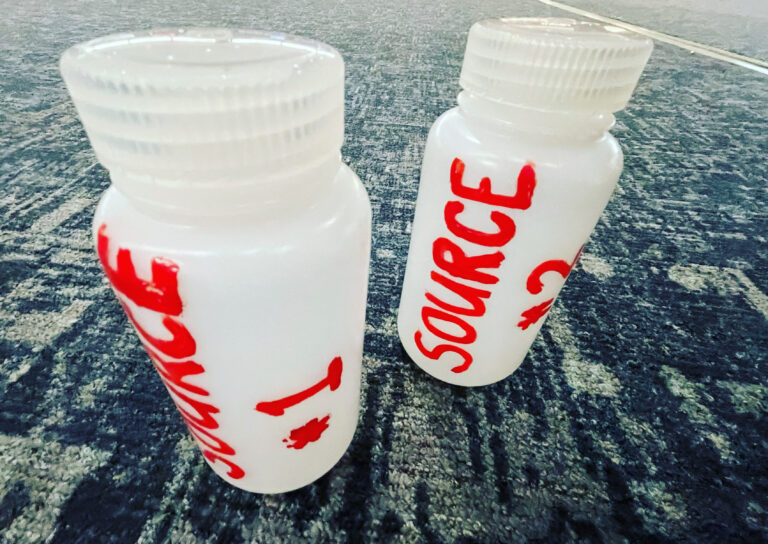
The photograph below shows two sample bottles identified by source. It illustrates the importance of connecting each sample to a defined location and collection record. A comparison starts with the question being investigated, the parameters selected and the receiving laboratory’s instructions. The collection record adds the date, operating conditions and relevant source information so the reports can be reviewed together. When results are returned, differences are considered alongside those records and the method limits. That context helps determine whether the data support a treatment decision or whether further sampling is needed.
Frequently asked questions about hydroponic water testing
What does your water-testing and analysis service include?
We help define the question, coordinate sample collection and laboratory selection, and interpret the results for your water source and system requirements. The agreed scope identifies the sampling locations, analytical panel, responsibilities and follow-up support.
Which water-quality parameters should we test?
The panel depends on whether you are evaluating source water, treated water, a nutrient solution or recovered water. Relevant parameters can include pH, EC, alkalinity, hardness, selected minerals and nutrients. Specific metals, microbial targets or other concerns require separately selected analyses and a suitable laboratory method.
Are pH and EC measurements enough?
They provide useful operating measurements but do not describe the complete water chemistry. EC does not identify individual nutrient concentrations, and pH does not measure alkalinity. Selected laboratory analyses can help answer questions those readings cannot resolve.
Can you evaluate recovered water or compare treatment performance?
We can help define sampling points and suitable analyses for a recovered-water evaluation or a comparison before and after treatment. Interpretation considers the source, collection conditions, process and intended use. Further testing or equipment review may be needed before a treatment recommendation is established.
How often should we collect samples, and how long do results take?
Sampling frequency depends on source variability, operating history and the question being investigated. Laboratory turnaround depends on the selected analyses and receiving laboratory. Collection, delivery and timing requirements are confirmed for the actual testing plan before sampling.
Does a normal result mean the water contains no contaminants?
A report covers the sampled water and the parameters analyzed within the laboratory method and reported limits. Unrequested substances are not assessed, and nondetect results do not establish a zero concentration. We help interpret what the report supports and whether additional testing is warranted.
Discuss your water-testing and analysis needs
Tell us about your water source, treatment process and the question you need to answer. We can review the information available and define a sampling, laboratory and interpretation scope for your facility.
Email service@waterprocess.com with your location, water source, existing reports and relevant treatment or operating information.