
Hydroponic Water System Installation

Commercial hydroponic system installation coordinated with your design
Hydroponic system installation turns coordinated drawings and equipment requirements into connected water infrastructure. Integrated Water Process installs and integrates tanks, pumps, piping, treatment equipment, instruments and irrigation distribution for commercial greenhouses and indoor growing facilities. We coordinate field work, installation checks and the handoff to agreed start-up and commissioning activities.
Our Total Water Management approach considers the connections between source water, treatment, storage, nutrient delivery, irrigation and any proposed recovery. We support projects across the United States, with particular focus on the Midwest and Mid-Atlantic.
Installation builds on the work defined through hydroponic grow system planning and hydroponic system design and drafting. Before field work begins, we review the available drawings, equipment information, site conditions and responsibilities for each part of the installation.
Resolve installation interfaces before they become field problems
The problem: equipment arrives before the site is ready
A water-system installation depends on more than having the components on hand. Tank placement, piping routes, utilities and access must be coordinated with the building and other trades. Missing information or incomplete site work can leave important connections unresolved when installation begins.
The impact: late decisions affect work and access
Unresolved interfaces can lead to repeated handling, piping changes or delayed equipment connections. In an operating facility, unplanned interruptions can also affect irrigation and production schedules. Equipment placed without service clearances may be difficult to inspect, clean or replace later.
The installation response: coordinate the sequence and responsibilities
We establish the installation scope, review readiness and coordinate equipment connections with the responsible project participants. Field questions and proposed changes are recorded and resolved with the appropriate designer or supplier. Installation checks and a documented handoff prepare the system for its agreed next stage.
What hydroponic water-system installation can include
- Review installation readiness: confirm drawing status, equipment information, access, utilities and work areas before mobilization.
- Coordinate equipment procurement: align selected components, supplier information, deliveries and installation sequence with the approved requirements.
- Place tanks and process equipment: coordinate location, support, connections and access for storage, nutrient batching and treatment equipment.
- Install pumps, valves and piping: connect the mechanical water system with attention to isolation, drainage and future service.
- Connect treatment and filtration: integrate equipment and accessories with the source-water, storage and distribution arrangements.
- Install irrigation and nutrient-delivery components: coordinate distribution piping, manifolds and fertigation equipment within the defined work scope.
- Coordinate instrumentation and controls: install agreed measurement devices and clarify interfaces with responsible electrical and controls providers.
- Complete installation checks and handover: record agreed inspections, open items, start-up requirements and information needed by the owner and commissioning team.
Installation outputs and handover information
The proposal identifies which installation work, records and support are included. Depending on the project, outputs can include:
- An agreed work sequence and responsibility list covering deliveries, site access, utility interfaces, other trades and any planned shutdowns.
- Installed equipment and connected piping checked against the agreed drawings, equipment information and approved field changes.
- Inspection and installation-check records documenting the checks performed, observed conditions and unresolved items.
- Field changes and drawing markups that record departures from the design and support the agreed final documentation.
- Equipment information and operating settings relevant to the completed work and any start-up support included in the scope.
- A handover and open-item list identifying work needed before commissioning or acceptance, along with agreed operator guidance and support contacts.
The proposal defines the installation checks and any performance-acceptance work. Detailed testing and commissioning are included when expressly agreed in the project scope. The scope also identifies responsibility for controls programming, formal record drawings and operator training.
From site readiness to installation handover
1. Review the design and installation conditions
Review the available drawings, equipment requirements and site information. Confirm work boundaries, facility access, utility connections and any information that must be resolved before installation.
2. Coordinate equipment, trades and work windows
Align procurement and deliveries with the installation sequence. Identify responsibilities for electrical work, controls, building provisions and any temporary arrangements or shutdown windows required in an operating facility.
3. Install and connect the water-system equipment
Position equipment and complete the agreed mechanical connections. Check piping routes, identification, isolation and service access, and coordinate field questions or changes before affected work proceeds.
4. Complete the agreed installation and start-up checks
Inspect connections and carry out the defined checks for leaks, equipment operation, instrumentation and control interfaces. The equipment and commissioning requirements determine the test methods and acceptance criteria; results and remaining items are recorded.
5. Prepare the handover and next-stage support
Review the completed work, relevant equipment information and open items with the project team. Coordinate the transition to commissioning, operator guidance and ongoing water-system maintenance under the agreed follow-on scope.
Install for service access and defined operating conditions
Tanks, pumps and piping
Tank location, support and piping connections are coordinated with the facility and responsible designers. Pump and valve arrangements should provide the specified connections and operating range, with access to isolation points, drains, strainers and components requiring service. Installation follows the approved project requirements and relevant manufacturer instructions.
Treatment, irrigation and nutrient delivery
Filtration and treatment packages need coordinated supply, outlet, drain and service connections. Irrigation distribution and nutrient-delivery equipment must connect to the intended zones and operating functions. Source-water questions identified during installation can be reviewed through water testing and analysis rather than resolved by equipment assumptions alone.
Instrumentation and precision operation
Precision means defining operating targets and acceptable deviations for flow, pressure, tank levels and the water-quality measures relevant to the facility. Measurement devices can include level, pressure and flow instruments, along with electrical conductivity (EC), pH and temperature instruments. Installation and agreed instrument checks prepare those devices for verification against the operating requirements.
Utilities, controls and facility requirements
Water-system work is coordinated with the owner, equipment suppliers and responsible trades. Electrical installation, controls programming, backflow protection, drainage, building provisions and project-specific approvals have defined responsibilities. Applicable requirements and inspections are addressed with the responsible disciplines and reviewing authorities within the agreed scope.
Explore the related water storage, irrigation pump, water filtration and hydroponic irrigation system solutions. The water-engineering glossary explains commonly used terms.
Field example: equipment connections and service access
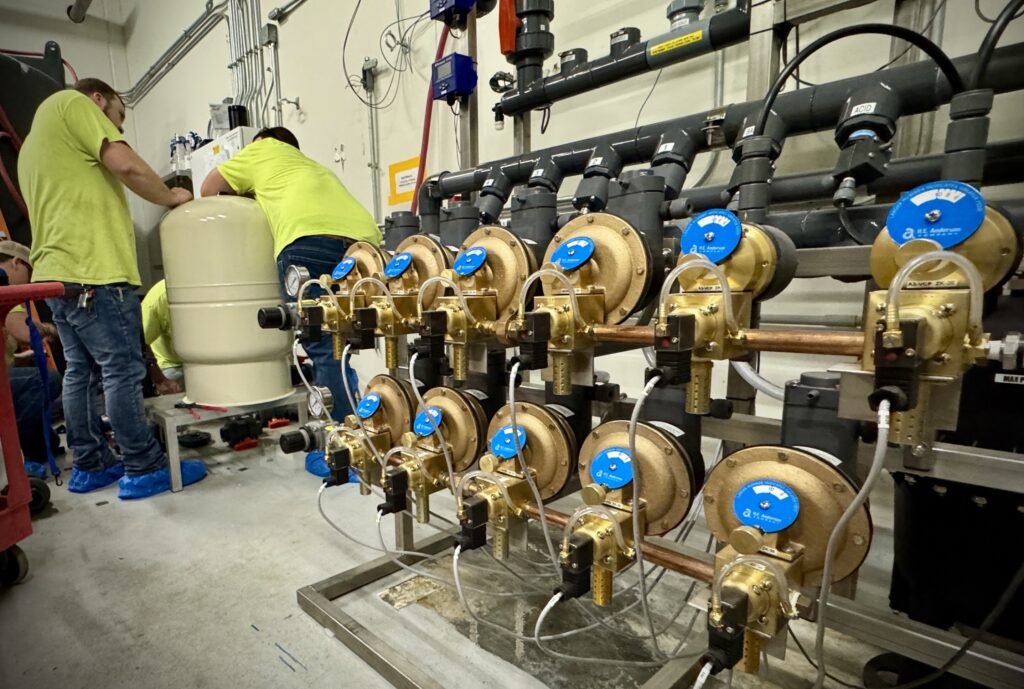
The installation photograph below shows technicians working beside a fertigation manifold, connected piping and tank equipment. It illustrates why the installation sequence must consider both equipment connections and the space needed to carry out the work. Valves, instruments and dosing components also need access for inspection and service after handover. A coordinated installation connects the physical arrangement to the design requirements and records field questions or changes. The checks and commissioning scope then establish which installed functions are verified and how the results are documented.
Frequently asked questions about hydroponic system installation
What does hydroponic water-system installation include?
The agreed work can include tanks, pumps, piping, valves, filtration, treatment equipment, instruments and irrigation distribution. Equipment procurement, control interfaces, installation checks, start-up support and handover records are identified in the proposal before work begins.
Can you work from drawings supplied by another designer or equipment supplier?
We can review the available drawings, equipment information and installation requirements to establish the work scope and clarify interfaces. Missing information or proposed design changes must be resolved with the responsible designer or supplier before the installation relies on them.
Can installation take place in an operating growing facility?
Work in an operating facility is coordinated around production, access and available shutdown windows. Phasing and temporary arrangements can be considered where practical, with responsibilities and interruptions agreed with the owner. Continued operation depends on the specific work and facility conditions.
How do you coordinate electrical work and controls?
We coordinate water-system requirements with the owner, equipment suppliers and responsible trades. Responsibilities for electrical installation, controls programming, utility connections and interface checks are defined in the project scope rather than assumed to be included in every installation.
What determines the installation cost and schedule?
Equipment lead times, system size, site readiness, piping routes, utilities, controls interfaces and shutdown requirements affect the work. Reviewing the design and facility conditions establishes the basis for an installation proposal and work sequence. Timing is agreed for the actual project scope.
Are commissioning, training and maintenance included?
Installation verification and agreed start-up support prepare the system for its next stage. Detailed commissioning, performance acceptance, operator training and ongoing maintenance are included expressly in the installation scope or defined as follow-on services. The proposal identifies the responsibilities and support provided.
Discuss your hydroponic water-system installation
Tell us about your facility, available design and target installation period. We can review the equipment, site conditions and coordination needed to define the installation scope and next steps.
Email service@waterprocess.com with your location, drawings, equipment information and any planned shutdown requirements.